Marie Wheeler
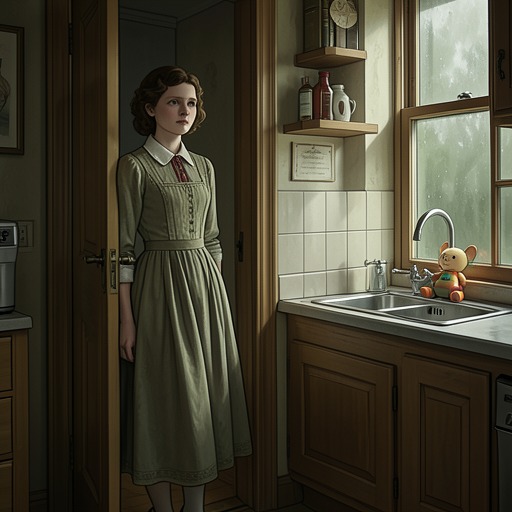
Pamela's WarMarie Wheeler is the vivacious and talented mother whose practical generosity gives the family’s wartime life much of its warmth and resilience. Pretty, sociable, and skilled enough to make beautiful hats after serving an apprenticeship with Madame De Leats in Edgbaston, she treats care not as a private virtue but as something to be enacted: through food, hospitality, celebration, work, and resourcefulness. In a world of bombing, rationing, bereavement, homelessness, and institutional restrictions, she repeatedly creates small zones of abundance and human connection.
Identity and Family Background
Marie Wheeler is one of three children. She has an older or younger sister, Edith, a talented musician who frequently plays and sings for the BBC, and a younger brother, Fred, the long-awaited son after two daughters. Fred is spoiled by the entire family, and his indulgence helps explain behavior that later proves difficult in adulthood. Marie nevertheless remains devoted to him. Her husband, Sidney Wheeler, eventually comes to detest Fred, bans him from the house, and refuses to forgive earlier grievances, while Marie continues to adore her younger brother and believes that he can do no wrong.
Marie’s marriage to Sidney begins after his return from the war and his meeting with her during wartime leave. She is described as pretty, vivacious, and fun to be with, but her charm is inseparable from competence. Her apprenticeship as a milliner has given her the ability to design and make elegant hats, and she wins over almost everyone she encounters. The combination of sociability and craft places her at the intersection of appearance, service, and domestic skill: she can welcome people, make them feel at ease, and produce something beautiful with her own hands.
Wartime Care and Hospitality
At the family hotel, Marie’s generosity extends beyond the household. Although the countryside provides vegetables, milk, and eggs, wartime shortages still leave many friends and customers struggling. The hotel’s catering allowances and commercial food supply allow its diners to eat without spending their own coupons, an advantage that troubles those without enough money. Marie responds not by ignoring the inequality but by quietly redistributing what the hotel has. At the end of an evening, she makes sure that departing friends and customers take home butter, bacon, steak, or eggs.
Her care is practical rather than ceremonial. The hotel’s successful fish and chips depend on a carefully arranged supply chain: fresh fish is ordered from Birmingham Fish Market, packed in ice, taken to the Midland Red Bus Station, carried roughly fifteen miles by the Clent bus, and delivered across the road to the hotel kitchen. The quality of the food means that customers receive a good meal without the long queue found elsewhere. Marie’s generosity therefore rests on labor, planning, and access to scarce provisions, but she uses that advantage to soften the effects of rationing for people around her.
She also turns the hotel kitchen toward military service. When a battalion of young soldiers is posted in a nearby field to operate a searchlight against German bombers, their basic cooking equipment and lack of experience make their rations almost inedible. Once Marie learns of their predicament, she offers a solution: the soldiers can bring a joint of meat to the hotel, where she will prepare and cook it, and then return at the appointed hour to eat. The men march across the field in single file, leave the searchlight behind, and sit around a large table for a proper meal. Drinks accompany the food, since the destination is a licensed hotel, but the central act is Marie’s contribution to the war effort through cooking and hospitality.
Family Conflict and Emotional Loyalty
Marie’s loyalty is most visibly tested through Fred. Her affection for her brother is not moderated by Sidney’s hostility. On the morning of the narrator’s wedding, November 10, 1943, Fred arrives at the house, and Marie greets him with delight. She is determined to make the day celebratory after years of sadness and upheaval, so champagne is opened early. Sidney, who has neither forgotten nor forgiven the past, withdraws into the garden rather than remain under the same roof as Fred. Marie continues celebrating with her brother, turning the wedding morning into a party even as the family’s unresolved conflict remains physically staged around her.
Her response is characteristic: she protects pleasure and connection without pretending that conflict has disappeared. The house contains both her joy and Sidney’s refusal, and Marie’s position is emotionally active rather than neutral. She chooses attachment to Fred, while still participating fully in her daughter’s marriage and welcoming John Fellows. She likes John because he is good company and shares her love of parties; their mutual enjoyment also makes him an enthusiastic drinking companion. Her sociability becomes a bridge between generations at a moment when wartime marriage must be arranged with extraordinary speed.
Improvisation Under Scarcity and Displacement
Marie’s resourcefulness becomes especially important when the family is bombed out of its home. With almost no possessions left, the family is taken in by Jim and Renee Parkes, who squeeze them into the small accommodation above their café in Quinton. The family’s survival depends on friendship, but Marie belongs to the same practical culture of making do that allows people to endure shortages, insecure housing, and sudden loss. Her presence in this displaced household is part of a wider wartime pattern in which domestic space becomes temporary refuge and ordinary hospitality becomes a form of social protection.
Her ingenuity is also comic and illicit. After the family leaves the hotel and loses its catering coupons, food becomes scarce and hunger replaces the former abundance. Marie hears in a pub that a pig has been slaughtered and decides, despite the threat of imprisonment, to obtain a whole home-cured ham. She sets out with cash, and the problem of transporting the large piece of pork is solved by using the narrator’s new baby’s pram. The pram is covered with pristine white sheets and taken to the pub, creating the alarming appearance of an unattended baby when the narrator later finds it parked outside after ten o’clock. The episode captures Marie’s mixture of appetite, nerve, humor, and maternal practicality: even under rationing, she refuses to accept scarcity as the final word.
Motherhood and Historical Significance
Marie’s care continues into the next generation. When the narrator is pregnant, she helps gather the necessary clothing and equipment, while the family provides a hand-me-down cot, bedding, knitting, and a new pram. The baby’s arrival is organized within the constraints of wartime medicine and rationing: the mother receives a green ration book granting a pint of milk, first choice of fruit, and a double ration of eggs, while government provisions include orange juice and cod liver oil. Marie’s support makes motherhood possible amid limited goods, uncertain housing, and the absence of a settled home.
A beautiful baby girl is born on April 10, with John allowed a week’s leave to see his wife and child. The family still has few possessions and no home of its own, but Marie’s network of care gives the birth a future-oriented meaning. Her domestic labor is not passive background. It includes acquiring food, cooking for soldiers, sustaining guests, supporting a daughter through marriage and childbirth, and preserving family celebrations despite loss.
Marie therefore embodies the book’s account of wartime spirit at intimate scale. The war draws strangers together, lowers the usual reserve, and encourages people to offer lifts, meals, shelter, and practical assistance. Marie’s particular contribution is to convert that collective feeling into repeated action. Against the fires visible from forty miles away during the bombing of Coventry, against the young men who disappear from the hotel one by one, and against the grief that makes even family celebrations uncertain, she keeps making room for food, company, laughter, and hope. Her significance lies in showing how survival is sustained not only by soldiers and factories but also by the undervalued, often improvised labor of women who feed, shelter, organize, encourage, and carry a household through history.